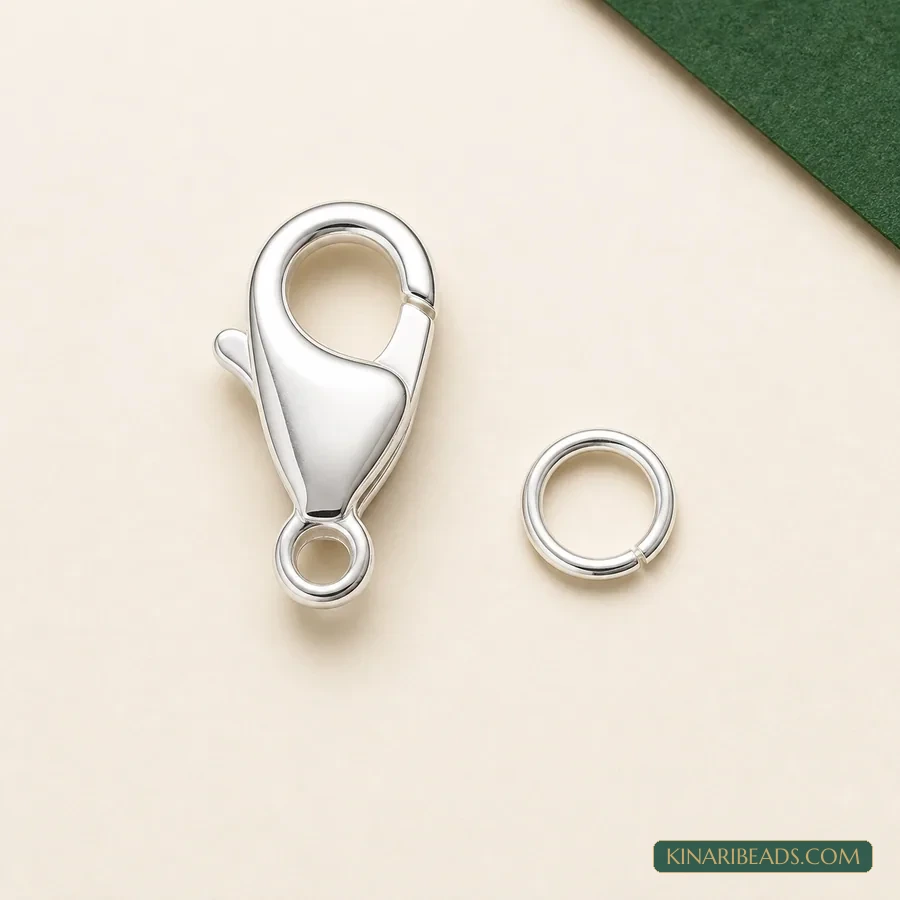
Silver Clasps at Kinari Beads
Explore sterling silver clasps within our Sterling Silver range at Kinari Beads. Sterling silver clasps provide a precious-metal closure for necklaces and bracelets that use compatible silver components. Closure forms can include lobster, spring, toggle, hook and other mechanisms in dimensions suited to different jewellery weights. This page is designed to help jewellery makers, small businesses, students and hobbyists compare the currently available options without losing sight of practical details. Product photographs show the style and finish, while each individual listing should be checked for its exact measurements, quantity, colour, material information, price and stock status before you order.
How to choose Silver Clasps
Check material information, mechanism, size, loop opening, weight capacity and ease of use for the intended wearer. Think about the complete project rather than one component in isolation: the scale of nearby beads, the opening of loops and holes, the strength of the stringing material, the metal colour and the overall weight all influence the result. Measurements in millimetres can look different on a screen, so compare them with a ruler or an existing piece. For repeated or customer-facing work, buying enough from one available batch can also help maintain a more consistent appearance.
Design ideas and practical uses
Finish gemstone strands, pearl necklaces, silver chains, charm bracelets and premium handmade pieces with a coordinated closure. Start by deciding whether the material will act as a focal point, a structural part, a repeating element or a subtle finishing detail. A limited palette often makes texture and shape easier to appreciate, while a broader colour mix can suit festive, playful or statement work. Lay components out before fastening anything permanently, check the design from both sides and wear-test prototypes for comfort, movement and balance. These simple steps are useful whether you are making one personal piece, preparing workshop samples or developing a small coordinated range for customers.
Working with Silver Clasps
Connect through secure silver rings or ends, align the mechanism and test repeated opening and gentle tension before completion. Use jewellery tools that match the material and operation, and practise unfamiliar techniques on spare components first. Avoid forcing parts together: a tight hole, undersized ring or unsuitable gauge usually needs a different component rather than extra pressure. Check every closure, loop, knot and connection under gentle tension, then remove sharp edges or exposed wire ends. If the finished piece will be sold or gifted, keep accurate notes about the materials and dimensions used so repairs, matching and responsible product descriptions are easier later.
Storage, care and ordering
Keep the mechanism clean and dry, store in anti-tarnish conditions and avoid harsh polish around springs or moving parts. Good organisation protects both quality and time. Label packets or compartments with the product name, size, colour and purchase date, particularly when several similar finishes are stored together. Order quantities should include a sensible allowance for pattern matching, testing and occasional rejected pieces, but the right allowance depends on the project. Kinari Beads displays current availability and pricing on the relevant product page. Where wholesale or quantity pricing is offered, review the stated pack and tier details before checkout, then use the secure PhonePe payment options shown during payment.
Frequently asked questions
What should I check before buying Silver Clasps?
Check the exact dimensions, material or finish, pack quantity, colour, hole or loop size where relevant, current stock and how the component will connect to the rest of your design. Product-specific details should take priority over general category guidance.
Can I use Silver Clasps for both personal and business projects?
Silver Clasps can be considered for personal designs, learning, workshops or small-business production when the individual product specifications suit the intended use. For repeated designs, test compatibility and consistency before ordering a larger quantity.